Brushed Stainless Steel
A directional satin appearance. Agree the grain direction and reference sample.
The same architectural line can feel quiet, reflective or warm. Use this visual guide to explore a direction, then confirm the material, process and sample for your project.
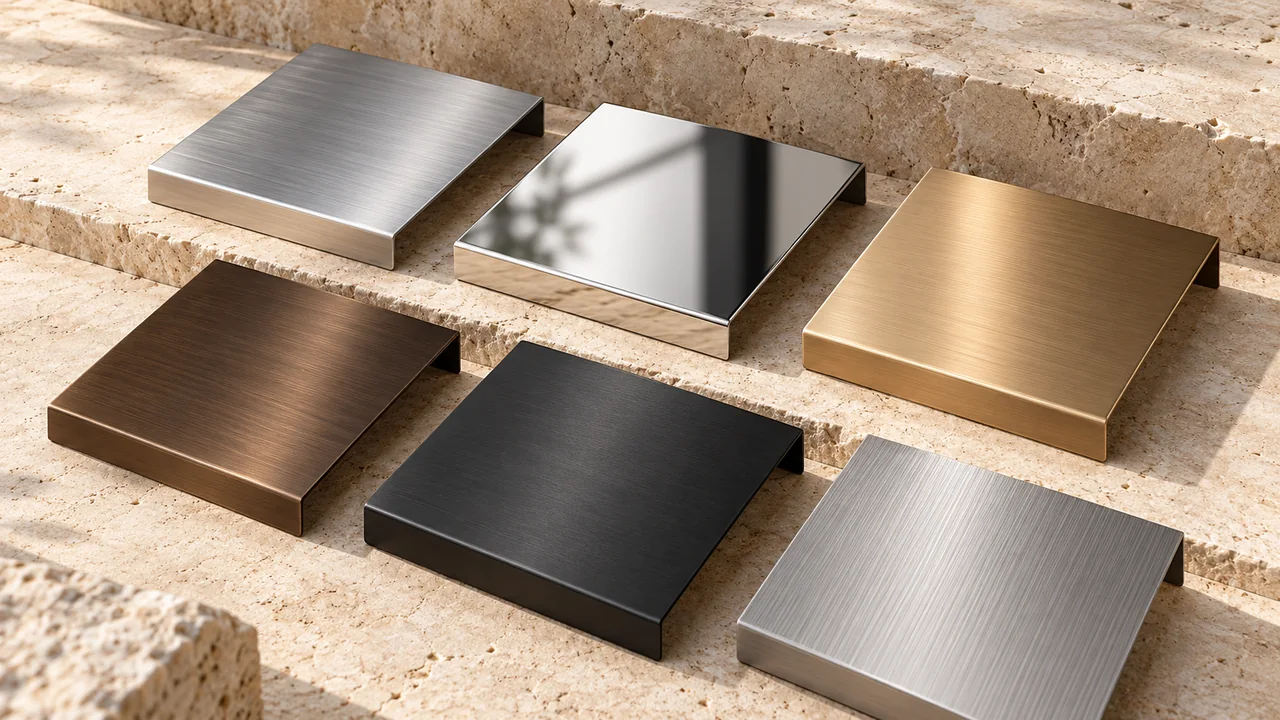
A directional satin appearance. Agree the grain direction and reference sample.
A highly reflective appearance. Review reflections, flatness expectations and handling.
A soft, warm colour concept. Confirm substrate, coating process and physical sample.
A deeper warm tone for surrounds and details. Specify acceptable batch variation.
A dark coated appearance. Confirm the offered PVD process and environmental suitability.
Fine linear texture with a continuous visual direction. Specify texture and orientation.
All swatches are digital illustrations, not measured colour references or a verified stock catalogue.
Grade, texture, detailing and cleaning work together. Interior decoration, exterior exposure and coastal locations need different levels of review.
Build your material brief304 and 316 are common stainless steel grade references in architectural discussions. They are not interchangeable promises of corrosion performance. Assess the actual site conditions and confirm availability, traceability and suitability before ordering.
Define grain direction, gloss, colour process, joint orientation and acceptable variation. Request a physical sample representing the proposed substrate and finish.
Obtain the offered finish supplier’s cleaning instructions. Avoid assuming a decorative finish is scratch-proof or maintenance-free.
General reference: British Stainless Steel Association architectural guidance. Project suitability requires a confirmed specification.
Both are commonly considered architectural stainless steel grades, but the right choice depends on exposure, chlorides, surface finish, detailing and maintenance. A qualified project specification should determine suitability. HAIHUI material availability remains to be confirmed.
No. A decorative colour or PVD process does not replace selecting a suitable substrate, detailing and maintenance plan. Confirm the full material and coating specification.
Screens cannot reproduce metallic reflection, texture, colour shift or batch variation accurately. A signed control sample and agreed viewing conditions make acceptance clearer.
The grade is one part of a material specification. Pair it with the actual exposure, finish, construction detail and maintenance plan.
This comparison is general guidance. It is not a confirmed HAIHUI stock list, a corrosion guarantee or a substitute for project material selection.
| Grade reference | General distinction | Review for the actual location |
|---|---|---|
| 304 | A common architectural stainless steel grade for less aggressive exposure. | Environment, finish, deposits, detailing and cleaning access. A grade name alone does not establish exterior suitability. |
| 316 | Contains molybdenum, which improves resistance to chloride-related corrosion compared with 304. | Salt or de-icing exposure, pollution, finish and maintenance. More severe conditions may require specialist selection beyond 316. |
Technical reference: IMOA guidance on 304, 316 and corrosion exposure. Confirm the proposed grade, thickness, finish and material evidence in writing.
Give the project team enough context to review the complete material and finish. Colour alone cannot establish suitability.
Include the site in your briefSurface texture influences how deposits and moisture remain on stainless steel. Review finish and cleaning alongside alloy selection; a decorative colour does not remove those questions.
Technical reference: IMOA stainless steel finish specification guidance.
A specialist should assess aggressive or unusual exposure. No fixed service life, maintenance-free finish or universal coastal specification is claimed.
Bring your dimensions, finish direction and project requirements together in one clear brief.
Request a QuoteBusiness enquiries: info@hecostech.com. Form availability is shown on Contact.